
Blog
The Difference Between AHA, BHA, PHA, and LHA Acids and When You Need Each Type

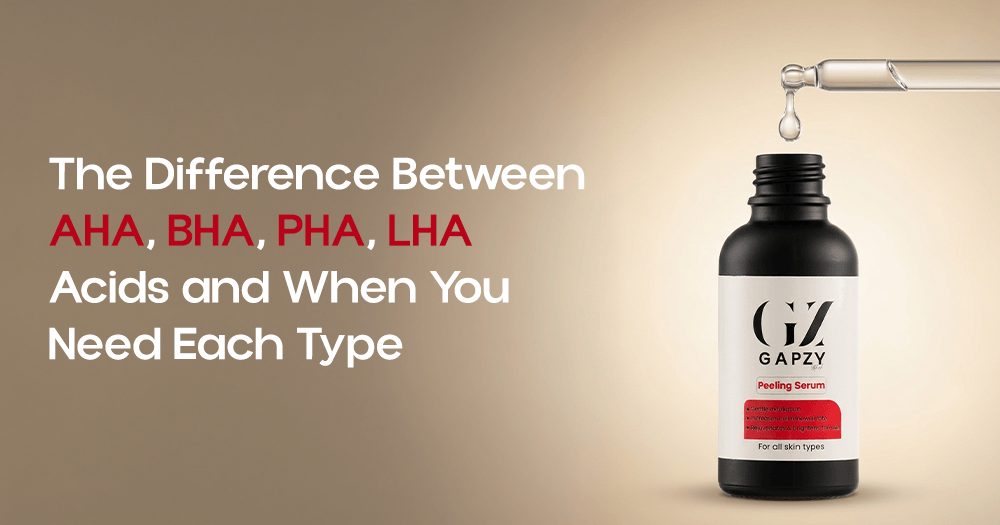
When reading the ingredient list of any exfoliating product, the acid names may seem similar, but their effects on the skin are vastly different. Understanding the difference between AHA, BHA, PHA, and LHA acids and when to use each is not just a luxury-it is an essential step to choosing the right product for your skin type and concerns.
Exfoliation is no longer just a superficial removal of dead skin, it is a science based on acid type, molecular size, solubility, and penetration depth. Here, we will explain the differences between these four acids in a simple and scientific way and show how Gapzy Peeling Serum combines them in a balanced formula for comprehensive results without irritation.
Why You Should Understand Exfoliating Acids
Before using any product, knowing how it works is crucial. Choosing the wrong acid may lead to:
- Excessive dryness
- Redness and irritation
- Worsening acne
- Unsatisfactory results
The right choice, however, offers:
- Smoother skin
- Cleaner pores
- More even tone
- Healthy cell renewal
This is why understanding the difference between AHA, BHA, PHA, and LHA acids and when you need each is a critical topic in skincare.
What Is AHA? Surface Exfoliation for Brightening and Smoothness
How AHA Works
Alpha Hydroxy Acids, like glycolic and lactic acid, are water-soluble and work directly on the skin’s surface. They dissolve the bonds between dead cells, making removal easier.
When You Need AHA
- Dry or dull skin
- Surface pigmentation
- Rough skin texture
- Instant radiance
Benefits of AHA:
- Noticeable brightening
- Rapid smoothing
- Improved appearance of fine lines
Note: Always use sunscreen as AHA increases sun sensitivity.
Read more: How to Safely Add Gapzy Granactive Retinol Serum
What Is BHA? The Ideal Solution for Pores and Acne
How BHA Works
Salicylic acid, the most common BHA, is oil-soluble, allowing it to penetrate pores and clean them from the inside.
When You Need BHA
- Oily skin
- Blackheads
- Recurrent acne
- Enlarged pores
Benefits of BHA:
- Reduces oil production
- Deep pore cleansing
- Reduces inflammation
What Is PHA? Gentle Exfoliation for Sensitive Skin
Why PHA Is Different
PHA has a larger molecular size, meaning slower penetration and less irritation. It also acts as a humectant, drawing moisture to the skin.
When You Need PHA
- Sensitive skin
- Starting chemical exfoliation
- Dry skin
PHA Advantages:
- Mild exfoliation
- Supports the skin barrier
- Reduces redness risk
Read more:Optimal Concentration
What Is LHA? Precise and Long-Term Renewal
How LHA Works
Lipo-hydroxy acid is a gentle salicylic derivative that works slowly and selectively on skin cells.
When You Need LHA
- Skin prone to recurrent acne
- Continuous exfoliation without irritation
- Gradual texture improvement
LHA Benefits:
- Reduces new acne formation
- Gradual cell renewal
- Controlled exfoliation
Comparison Table of AHA, BHA, PHA, and LHA
|
Acid |
Solubility |
Works On |
Best For |
Gentle Level |
|---|---|---|---|---|
|
AHA |
Water |
Skin surface |
Dry & dull skin |
Medium |
|
PHA |
Water |
Surface gently |
Sensitive skin |
Very high |
|
LHA |
Oil |
Gradual renewal |
Acne-prone |
Gentle |
|
BHA |
Oil |
Pores |
Oily / acne-prone |
Medium |
This table clearly shows the differences and helps you decide which acid to use.
Why Combining All Four Acids Is the Smart Solution
Using a single acid treats only one issue, but if you have:
- Enlarged pores
- Pigmentation
- Acne
- Uneven texture
A carefully formulated combination becomes more effective.
How Gapzy Peeling Serum Combines All Four Acids:
- AHA: Brightening and smoothing
- BHA: Deep pore cleansing
- PHA: Gentle hydration and exfoliation
- LHA: Precise renewal
This combination reflects a deep understanding of the difference between AHA, BHA, PHA, and LHA and when to use each, providing a balanced solution without needing multiple products.
Chemical vs. Physical Exfoliation
When learning about the differences between AHA, BHA, PHA, and LHA, it’s important to distinguish chemical exfoliation from traditional physical scrubs.
- Physical exfoliants: rely on friction and may cause micro-scratches or irritation on sensitive skin.
- Chemical acids: dissolve bonds between dead cells without rubbing, making exfoliation smoother and safer-especially with a balanced formula like Gapzy Peeling Serum.
Dermatologists recommend carefully formulated chemical exfoliation for maximum effectiveness and minimal irritation.
When to Avoid Exfoliating Acids
- During pregnancy without consulting a doctor
- On open wounds or severe inflammation
- When using retinol heavily without spacing
Moderation and gradual use are key.
Read more: Gapzy Granactive Retinol
Conclusion
Understanding the differences between AHA, BHA, PHA, and LHA and when to use each gives you the power to choose the right product instead of experimenting randomly.
- Surface issues : AHA
- Pore-clogged areas : BHA
- Sensitive skin : PHA
- Long-term renewal : LHA
When combined in a balanced formula like Gapzy Peeling Serum, these acids provide complete exfoliation, addressing multiple skin concerns in one scientifically designed step.
Frequently Asked Questions
Can AHA and BHA be used together?
Yes, as long as the ratios are balanced, like in ready-to-use formulations.
Which is better for acne, BHA or LHA?
BHA provides deep cleansing, while LHA helps prevent recurrence gradually.
Do acids thin the skin?
Used correctly with sunscreen, acids do not thin the skin, they improve cell turnover.
How to choose the right acid according to skin age?
Understanding the differences is not only about skin type but also age and condition.
- In your 20s: focus on BHA and LHA for oil control and acne prevention
- After 30: AHA becomes essential for surface renewal and reducing spots
- Sensitive skin: PHA provides a safe, balanced option
Comprehensive formulations like Gapzy Peeling Serum address changing skin needs without constantly switching products.
Reliable Sources on Exfoliating Acids and Safe Usage
- American Academy of Dermatology (AAD) -Safe Skin Exfoliation Guide:
https://www.aad.org/public/everyday-care/skin-care-basics/dry/exfoliate - Cleveland Clinic- Difference Between AHA and BHA:
https://health.clevelandclinic.org/aha-vs-bha/ - Harvard Health Publishing – Chemical Peels and Skin Cell Renewal:
https://www.health.harvard.edu/staying-healthy/chemical-peels-what-you-need-to-know