
Blog
Best Exfoliator for Sun-Induced Dark Spots 2026 | Gapzy

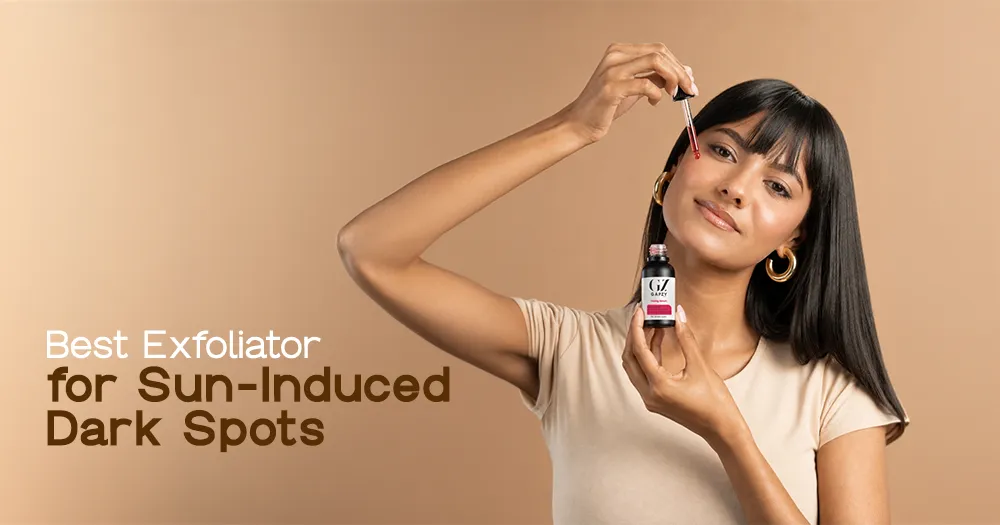
Repeated exposure to sunlight does not only affect the skin tone. It may also make the complexion look uneven, with areas that appear darker than the surrounding skin. As dead skin cells accumulate, dark spots may become more noticeable, while the face can look dull and feel rough.
For this reason, many people look for the best exfoliator for sun-induced dark spots as part of their skincare routine. Gapzy Peeling Serum features a combination of four types of exfoliating acids: AHA, BHA, PHA, and LHA, helping improve the appearance and texture of the skin.
Why Do Sun-Induced Dark Spots Appear?
When the skin is exposed to ultraviolet radiation, it attempts to protect itself by increasing melanin production. With repeated sun exposure without adequate protection, areas of the skin may become more pigmented than the surrounding complexion.
This May Appear As:
-
Brown or dark spots.
-
Uneven skin tone.
-
A dull and uneven complexion.
-
Dark spots that become more noticeable after sun exposure.
-
Rough skin texture caused by the accumulation of surface dead skin cells.
It is important to distinguish between exfoliation and brightening. An exfoliator does not work as a skin-whitening agent. Instead, it helps remove dead surface skin cells and improve the appearance and texture of the complexion, while pigmentation concerns may require a comprehensive routine that includes sun protection.
Best Exfoliator for Sun-Induced Dark Spots: Why Are Acids Important?
When looking for the best exfoliator for sun-induced dark spots, it is not enough to focus only on the word “exfoliation.” The type of acid and the way it works on the skin are also important factors.
Gapzy Peeling Serum Contains a Combination Of:
| Ingredient | Primary Role | What Makes It Beneficial in an Exfoliation Routine |
| Alpha Hydroxy Acids AHA | Surface exfoliation | Help improve skin texture and the appearance of uneven tone |
| Beta Hydroxy Acid BHA | Exfoliation and pore care | Particularly useful for oily skin and pore buildup |
| Polyhydroxy Acids PHA | Relatively gentle exfoliation | A suitable option for those looking for a gentler form of surface exfoliation |
| Lipohydroxy Acid LHA | Surface exfoliation and renewal | Helps improve skin texture and the appearance of pores |
This combination makes Gapzy Peeling Serum different from products that rely on only one type of exfoliating acid.
AHA vs. BHA vs. PHA vs. LHA for Sun Spots
Not all exfoliating acids work in the same way. The most suitable combination depends on the main skin concern you want to address.
For Dull Skin and Uneven Tone: AHA
Alpha Hydroxy Acids AHA primarily work on the skin’s surface and help remove dead skin cells. Therefore, they can be beneficial as part of a routine focused on improving the appearance of dullness and uneven skin texture.
When Dark Spots Are Accompanied by Pore Buildup: BHA
Beta Hydroxy Acid BHA, such as Salicylic Acid, is more closely associated with pore care and oily skin. Its presence in an exfoliating formula can therefore be beneficial when an uneven complexion is accompanied by excess oil or clogged pores.
For Gentler Surface Exfoliation: PHA
Polyhydroxy Acids PHA have larger molecular sizes than some other exfoliating acids and are therefore commonly used in formulas designed to provide a relatively gentle form of surface exfoliation.
For Skin Texture and Pores: LHA
Lipohydroxy Acids LHA are derivatives of Salicylic Acid and are used in products designed to exfoliate the skin while caring for its texture and the appearance of pores.
Therefore, combining AHA, BHA, PHA, and LHA in Gapzy Peeling Serum provides multiple approaches to caring for the skin’s surface and texture.
Exfoliator vs. Brightening Serum for Sun Spots
One common mistake is assuming that all pigmentation-focused products can replace one another. In reality, exfoliating products and brightening serums have different roles.
| Comparison | Exfoliating Serum | Pigmentation-Focused Serum |
| Dead Skin Cells | Targets their buildup | Not the primary focus |
| Skin Texture | Helps improve it | May not be the main focus |
| Uneven Tone | Helps improve its appearance | Directly targets the appearance of pigmentation |
| Pores and Buildup | Some acids can help address them | Depends on the formula |
| Sun Protection | Does not provide it | Does not replace sunscreen |
| Role in the Routine | Exfoliation step | Targeted cosmetic treatment step for pigmentation |
Therefore, the best exfoliator for sun-induced dark spots can be part of a skincare plan, but it does not replace sunscreen or targeted pigmentation-care products when needed.
Is Gapzy Peeling Serum Suitable for All Skin Types?
The way skin responds to exfoliating acids can vary depending on its type, sensitivity, and the other products used in the routine.
Oily Skin
The presence of BHA in the formula makes the product suitable for a routine that also focuses on the appearance of excess oil and pore buildup while exfoliating the skin’s surface.
Combination Skin
Combination skin may benefit from exfoliation when there is a difference between oily and dry areas. However, it is important to avoid over-exfoliating the skin.
Dry Skin
Dry skin may benefit from surface exfoliation when the primary concerns are dead skin cell buildup and rough texture, provided that adequate hydration is maintained.
Sensitive Skin
Sensitive skin requires greater caution when using exfoliating acids. It is best to introduce any exfoliating product gradually and discontinue use if significant irritation occurs.
Chemical Exfoliation vs. Other Ways to Address Sun Spots
Choosing the right approach depends not only on the appearance of the spots but also on the overall condition of the skin.
| Method | Primary Goal | Best Suited For |
| At-Home Chemical Exfoliation | Improving surface skin cells and texture | Dullness, roughness, and uneven appearance |
| Pigmentation-Care Serums | Targeting the appearance of dark spots | Pigmentation and uneven skin tone |
| Retinoids | Supporting skin cell turnover | Multiple concerns, including texture, fine lines, and pigmentation |
| Sunscreen | Reducing the impact of ultraviolet radiation | All pigmentation concerns and daily skincare |
| Professional Chemical Peels | Deeper exfoliation under professional supervision | Certain pigmentation and texture concerns that require medical assessment |
This comparison shows that Gapzy Peeling Serum is not a replacement for every step in a pigmentation-focused skincare routine. However, it can play an important role in improving skin texture and the appearance of accumulated surface dead skin cells.
How Does Gapzy Peeling Serum Fit into a Skincare Routine for Dark Spots?
If the goal is to improve the appearance of sun-induced dark spots, the skincare routine should not rely on exfoliation alone.
Skincare Can Be Organized Around Four Essential Steps:
-
Cleanse the skin using a cleanser suitable for your skin type.
-
Use Gapzy Peeling Serum according to your skin’s tolerance and the product’s directions.
-
Moisturize to help maintain skin comfort and hydration.
-
Apply sunscreen during the day.
Sun protection is an essential step because continued exposure to ultraviolet radiation can worsen pigmentation concerns and affect the results of a skincare routine.
Read also: When Do the Results of Gapzy Retinol Serum Appear?
Is Exfoliation Alone Enough to Fade Sun Spots?
No. This is why choosing the best exfoliator for sun-induced dark spots should be part of a comprehensive skincare routine rather than being considered the only solution.
Exfoliation helps improve the appearance of the skin’s surface, texture, and accumulated dead skin cells. However, pigmentation may be associated with increased melanin production. Therefore, the skin may also benefit from other ingredients specifically formulated to address the appearance of pigmentation, along with daily sun protection.
New spots or spots that change in shape, color, or size should be evaluated by a dermatologist rather than treated with exfoliating products alone.
Frequently Asked Questions
1. Is Gapzy Peeling Serum the Best Exfoliator for Sun-Induced Dark Spots?
Gapzy Peeling Serum can be a suitable option as part of a skincare routine for skin affected by dullness, dead skin cell buildup, and an uneven appearance, thanks to its combination of AHA, BHA, PHA, and LHA.
2. How Does Gapzy Peeling Serum Help Improve the Appearance of Sun-Induced Dark Spots?
Gapzy Peeling Serum exfoliates the surface layers of the skin and helps remove dead skin cells, which may improve the appearance of dullness and uneven skin tone. To maintain results, it should be combined with daily sun protection.
3. How Long Does It Take to See Results with the Best Exfoliator for Sun-Induced Dark Spots?
The timeframe varies from person to person depending on the cause of the dark spots, the degree of pigmentation, skin type, and the overall skincare routine. Gapzy Peeling Serum helps improve the texture and appearance of the skin gradually. Therefore, it is not recommended to judge the results after only a few uses or increase exfoliation frequency in an attempt to achieve faster results.
Choosing the best exfoliator for sun-induced dark spots is not simply about selecting the strongest exfoliating product. It also depends on your skin type and the specific concern you want to improve. Gapzy Peeling Serum features AHA, BHA, PHA, and LHA to provide multi-action exfoliation that helps remove dead skin cells while improving skin texture and the appearance of uneven tone. However, sunscreen remains an essential part of any skincare routine targeting sun-related dark spots. Cosmetic results also require consistency and adherence to an appropriate routine without over-exfoliating the skin.
Reliable External Sources
American Academy of Dermatology – Chemical Peels
U.S. Food & Drug Administration – Alpha Hydroxy Acids
American Academy of Dermatology – Skin Care Basics